
Stop the Farallon Islands Poison Drop
© David Krug / Adobe Stock
Update December 17, 2021
WildCare is very disappointed at the decision made late on December 16, 2021 by the California Coastal Commission to grant conditional concurrence to the United States Fish & Wildlife Service (USFWS) plan to drop poison on the Farallon Islands to control a non-native House Mouse population. The vote was 5 – 3 in favor of concurrence.
© sjessup / Adobe Stock
Yesterday’s consistency determination hearing went until almost 10pm, with the Coastal Commissioners asking good questions and clearly expressing their concerns about the plan.
You can watch the hearing, recorded live on Zoom, here.Note that the hearing on the Farallon Islands starts at 5:00:00 (five hours into the meeting.)
Although the hearing went against our stand, two additional conditions were added to the plan in the late hours of the hearing– the addition of a stormwater runoff plan, and a call for the plans to return to the Commission for “informational review” prior to the execution of the plan.
This condition’s inclusion is the right addition, because none of the mitigation plans to prevent the dire consequences feared by those of us opposing the poison drop plan are yet fully developed. With this condition in place, the final mitigation plans must be brought back to the Commission for review. If a majority of the Commission agreed that the plans were insufficient, they could re-open the finding of concurrence.
Many of the conditions included in the staff recommendations also reflect the significant concerns WildCare and our allies have expressed over the years that this issue has been debated.
So, although concurrence was granted, WildCare considers this to be a partial victory for increased transparency and protection.
Although the poison drop is now very likely to happen, WildCare is very proud to have stood against this potentially catastrophic plan, and we will continue to speak out against the use of deadly anticoagulant rodenticides in this, and all instances.
We know that this poison drop, when it occurs, will likely bring a large number of poisoned animals needing care to our Wildlife Hospital, and we will be ready to provide that care if necessary.
Thank you to everyone who commented or testified to the Coastal Commission, and to everyone who has supported us in our fight against the deadly use of anticoagulant rodenticides.
WildCare will continue to monitor this issue. We will closely review the plans as soon as they are available, and will encourage the Coastal Commissioners to make sure the mitigation measures and independent monitoring happen, and that the amount of poison to be used (and the number of poison drops) stays consistent with the approved plan.
The United States Department of the Interior’s Fish and Wildlife Service (USFWS) first proposed the “South Farallon Islands Non Native Mouse Eradication Project” in 2011 to eliminate a population overgrowth of non-native house mice (Mus musculus), probably first introduced to the islands in the 1800s.
They completed an Environmental Impact Statement in 2019 (download the PDF here), and came up with their preferred plan.
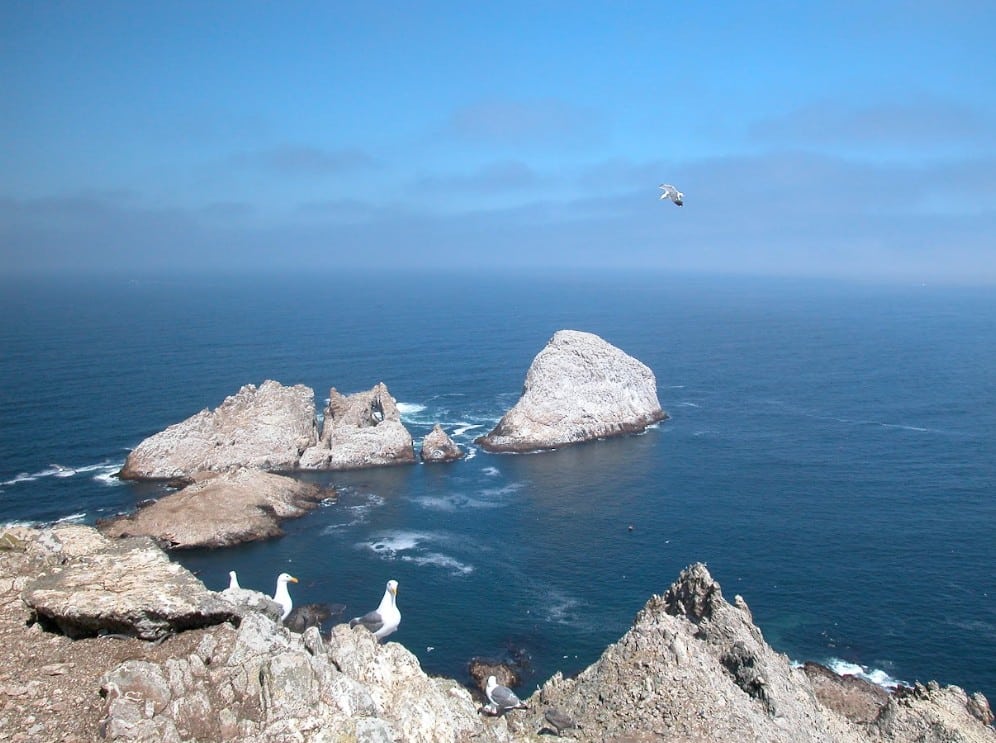
Photo by Juan-Carlos Solis
That plan is to air-drop a total of 2,917 pounds (that’s 1.3 metric tons) of toxic rodenticide pellets on the Farallon Islands to eradicate the non-native mice reported to endanger other species.
Because of the extensive experience we have with these poisons and their risks to wildlife, WildCare strongly opposes this action!UPDATE NOVEMBER 24, 2021
The California Coastal Commission had released the agenda for the December meeting which includes the consistency determination by the U.S. Fish and Wildlife Service for the South Farallon Islands Invasive House Mouse Eradication Project on Thursday, December 16.
Members of the public who wish to join WildCare in speaking out against the proposed poison drop should register to speak as soon as possible.
On the request form:
- You will be speaking on a specific agendized item.
- From the dropdown menu on the next page, choose the item “Th11b”.
- In the next box, choose “9. I am an interested member of the public”.
- Unless you are speaking with more than one person on your device, choose “no” regarding speaking with a group.
- WildCare opposes the staff recommendation (Coastal Commission staff recommends that the Commissioners grant consistency.)
The Coastal Commission also released an updated email address to receive comments regarding the issue. Please submit comments opposing the poison drop to EO
Together we can stop this unnecessary, and environmentally catastrophic, proposal! See below for talking points.
Talking Points for the California Coastal Commission Hearing on December 16, 2021To complete the request form:
- You will be speaking on a specific agendized item.
- From the dropdown menu on the next page, choose the item “Th11b”.
- In the next box, choose “9. I am an interested member of the public”.
- Unless you are speaking with more than one person on your device, choose “no” regarding speaking with a group.
WildCare opposes the staff recommendation (Coastal Commission staff recommends that the Commissioners grant consistency.)
The Coastal Commission also released an updated email address to receive comments regarding the issue. Please submit comments opposing the poison drop to EORFC@coastal.ca.gov.
Talking points:
The Farallon Islands, just off our coast, are wild and starkly beautiful. They are deserving of the many layers of protection afforded them over the years, including designating them a National Marine Sanctuary and a National Wildlife Refuge. The California Coastal Commission should not condone the use of deadly environmental poisons on these islands.
In 2020, legislation was passed and signed by Governor Newsom, outlawing the use of this very same poison (the anticoagulant rodenticide, brodifacoum) in California. This is because of the documented impact on predators up the food chain. 76% of raptors, foxes, bobcats and other predatory animals tested by WildCare (in Marin County) have this poison in their blood. Other studies across the country have shown similar impacts on Bald Eagles and Red-Tailed Hawks.
It is impossible for anyone to ensure that the massive load of poison proposed to be strewn across the South Farallon Island will remain on the island alone, only affecting the rodents it is intended to kill. Poison will end up in the water and kill marine life. It will also be in the bodies of birds leaving the islands. These poisons travel up the food chain, killing or debilitating both the nontarget animals that consume the poison, and the animals that consume those that have eaten the poison.
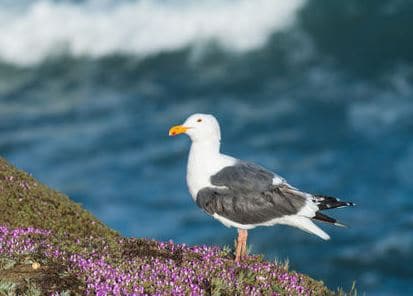
Hazing will not work. There will be Western Gulls that get sick and die from the use of rat poison on the island. Studies show that the gull population is not constrained to the Islands, and in fact the birds circulate widely. Given how far gulls travel to and throughout the mainland, how could anyone stop the poison from entering the food chain in regions around the Bay?
- The USFWS assertions that the poison will not leave the island are based on hazing trials conducted when there were not edible cereal pellets of poisoned bait OR dead and dying mice strewn across the island. Deterring hungry gulls from a readily-available food source is virtually impossible, especially long-term.
This proposal to drop anticoagulant rodenticides on the Farallon Islands has been circulating for more than 10 years. If, over the course of those ten years a comprehensive IPM rodent reduction and removal strategy had been implemented,the Southeast Farallon Island would have significantly fewer mice.
- The House Mice are not the primary threat to the nesting seabirds on the island. Since WildCare began opposing the poison drop plan in 2011, there has been little or no evidence that the mice themselves directly threaten the seabirds nesting on the island. Instead, a small population of 6 – 10 Burrowing Owls begin to prey on seabird nestlings once the mouse population decreases in its seasonal fluctuation. Relocation of the Burrowing Owls that threaten endangered seabirds, and implementation of a comprehensive, nontoxic IPM strategy should be the choice, not poison.
There is no ‘safe’ level of usage of these second-generation anticoagulants and I hope you will carefully consider the unintended consequences before supporting any use of these poisons on the Farallon Islands. The California Coastal Commission should protect our beautiful coast, not condone the use of deadly environmental poisons.
Worldwide, thirty-eight-percent (38%) of the initial aerial applications of this same Brodifacoum rodenticide bait during eradication efforts to control mice on islands have failed to fully eliminate the mice. Since it is not uncommon for an initial Brodifacoum drop to fail to fully eradicate mice, a follow-up repetition of recurring poison applications is often tried during the following years. Mice, in particular, tend to quickly develop a genetic resistance to such rodenticides, further complicating the escalating biological risks for harmless non-target species in the path of what then becomes an inevitable series of repeated multi-year poison drops.
Unanticipated harm to ecosystems on other islands around the globe resulting from spreading this same poison is well-documented. Not surprisingly, follow-up analytical studies found that brodifacoum was still present in fish within the drop zone three years after the 2012 helicopter distribution of this same chemical on Wake Island in the middle of the Pacific Ocean.
“Protect and Restore?”
The Project (quoting the Environmental Impact Statement from the United States Fish & Wildlife Service (USFWS) “expects that eradicating invasive mice will benefit native seabirds, amphibians, terrestrial invertebrates, plants, and wilderness quality, and will help restore natural ecosystem processes on the islands.”
To this end, the Service proposes three action alternatives, their preferred of which they say “will provide a high likelihood of success based on similar projects elsewhere while minimizing incidental impacts to other resources.”
These alternatives are:
- Alternative A: No action
- Alternative B (preferred): Aerial broadcast of the rodenticide “Brodifacoum-25D Conservation”
- Alternative C: Aerial Broadcast of Diphacinone-50 Conservation
In 2013 when, with WildCare’s support, outrage against the proposal to blanket the islands with rat poison reached its peak, USFWS backed off from their proposal and promised to complete the EIS before further action was taken.
Unfortunately, the report still came back with only those same two alternatives given- to dump rodenticide all over the islands, or to do nothing about the mouse infestation.
The only alternatives?
WildCare does not believe these are the only options open to the USFWS to control rodent populations on the Farallon Islands, and the problems with these “action alternatives” are manifold:
1. The Farallon Islands are an incredibly sensitive environment. Anything that happens on any of them will affect everything on the island(s) and in/throughout nearby waters. These islands are also not far from San Francisco, Marin and Sonoma Counties, which means that animals that come into contact with the poisoned bait on the islands will sicken or die on the mainland, exposing more wildlife to the risks of secondary poisoning.
2. Brodifacoum is toxic to birds, mammals and aquatic life (this is according to the product label, read it here) and is an extremely dangerous and persistent environmental poison. Brodifacoum persists in the soil for 120+ days, and it can persist in the livers of exposed animals for over 200 days (more than eight months!)
In fact, the California EPA has banned the sale of rodenticides containing brodifacoum to consumers because of its toxicity and the dangers to non-target wildlife. Registration for these toxic poisons has also been cancelled on the federal level.
Proponents of the USFWS plan insist that island conservation is different, and that poison should be allowed in this situation because it is unique. WildCare says that everyone thinks their poison situation is unique! People think “it’s just my backyard.” “It’s just my neighborhood park.” But what they don’t realize is that every other person has come to the same conclusion, and that means these dangerous and deadly poisons are everywhere in our environment.
In this case, officials are thinking “It’s just the Farallon Islands,” but this is a terrible precedent to set in the San Francisco Bay Area. Poison is the easy way out, but the easy way is not always the best way. A sustained rodent control campaign on the islands would help threatened seabirds, reduce the impacts of the mice on native vegetation and endemic wildlife and eventually rid the island of the mouse problem. But it wouldn’t be easy. Solving nuisance wildlife problems the environmentally responsible way rarely are.
3. Non-target predator animals will consume the rodents that have eaten the pellets and be poisoned too.
The document “Rat Island Rat Eradication Project: A Critical Evaluation of Nontarget Mortality” (click to read the PDF) outlines the unintended consequences of this type of eradication project. Quoting from the document:
“Some nontarget mortality was expected, but the actual mortality exceeded the predicted mortality. Forty six Bald Eagles died (exceeding the known population of 22 Bald Eagles on the island); toxicological analysis revealed lethal levels of brodifacoum in 12 of the sixteen carcasses tested.”
Over the past decade, WildCare has tested hundreds predatory patients in our Wildlife Hospital for exposure to rodenticides from having eaten poisoned rodents. A shocking 76% of tested patients test positive, and many of these patients died from their exposure. Our research demonstrates conclusively that non-target animals can and do die from eating rodents that have eaten poison. These toxins are persistent in the environment and deadly; they should not be used in massive quantities in national wildlife refuges.
4. Non-target species will consume the pellets. The document about the Rat Island project, “Critical Evaluation of Nontarget Mortality” (PDF), further demonstrates that, while most poisoning of non-target animals resulted from predation upon bait-poisoned rodents, gulls and other animals were found to have also consumed the pellets and to have died from primary poisoning from brodifacoum.
There is a large population of Western Gulls on the Farallon Islands, even during the non-breeding season (when the poison drops would happen). These birds, and other species will also consume both the poison pellets and the dead and dying mice, becoming poisoned themselves.
5. WildCare believes a plan to “haze” gulls away from the islands prior to the dumping of the poison won’t work. The idea that the agency can “haze” gulls away from the island in conjunction with the poison drops is ludicrous to anyone who has ever tried to shoo a gull away from a picnic site. The birds may be temporarily deterred, but they will come back.
Rodents that have consumed brodifacoum do not die immediately. They can live for days after taking their first deadly dose of rat poison, slowly weakening from internal bleeding. Sick and dying rodents make easy prey, and their thirst and disorientation means they will be ready meals for opportunistic Western Gulls that will take advantage of such a smorgasbord of easy-to-catch prey.
Tests done by USFWS to determine the efficacy of gull hazing methods were incomplete as the tests did not include dumping 2,917 pounds of edible bait on the islands, nor did they arrange for thousands of dying mice to be present. Gulls may be deterred when there are not two readily-available food sources available (the bait and the dying mice), but any analysis of gull behavior near a food source demonstrates that deterrents will likely be less effective than anticipated.
Hazing will not deter gulls from ingesting poison, or from ingesting poisoned rodents.
6. The mice aren’t themselves the primary danger to the seabirds that nest on the island. The large numbers of mice on the islands have attracted 6 – 8 non-resident Burrowing Owls, a threatened species on the mainland. Annual cycles cause the mouse populations to rise and fall, and when mouse populations plummet, the seabird nestlings become the prey of these raptors. Ashy Storm Petrel chicks are consumed by opportunistic Burrowing Owls, but should the entire ecosystem be blanketed in toxic rat poison to prevent this? Surely there is another way!
WildCare strongly suggests hazing or removing the Burrowing Owls to prevent further predation on the Ashy Storm Petrels while a more reasonable IPM strategy for dealing with the mouse overpopulation is implemented.
The fact is, this situation has existed on the South Farallon Islands for decades. WildCare and our allies do not disagree that the mouse problem needs to be dealt with. What we disagree with is that the only two alternatives to help and protect the fragile ecosystem on the Farallon Islands are to a) do nothing or b) drop 2,917 pounds of poisoned bait on the islands. We also disagree that the potential for significant collateral damage to non-target wildlife doesn’t matter.
About “Brodifacoum-25D Conservation”
In WildCare’s Wildlife Hospital, dozens of animals each year die from pesticide poisoning. Our multi-year initiative to test rodent-eating animals admitted to the hospital for rodenticide levels show varying levels of rodenticide residue in hundreds more patients. Read more about WildCare’s work to combat rodenticides here.
The majority of poisoned patients, however, are not the targeted pests like rodents; they are instead the predators that eat the poisoned rodents. This is called secondary poisoning, and is a harsh reality of pest eradication programs such as this one.
USFWS claims the “conservation” variety of the second-generation anti-coagulant rodenticide brodifacoum is less harmful to non-target species (i.e. every animal on the islands other than the mice). WildCare’s experience and information show this to be untrue- Brodifacoum is one of the most toxic, dangerous and persistent rodenticides available, and the amount of active ingredient in the “Conservation” variety differs only slightly from that in the full-strength product.
Click to read the actual safety label information from the product in question.
Arguments in favor of this proposal overwhelmingly focus on the necessity to protect the many endemic species and species of special concern that live and breed on the Farallones. It is WildCare’s position that, if control of House Mouse populations is necessary, responsible, non-toxic and environmentally sustainable approaches must be used.
The aerial broadcasting of toxic rodenticide pellets over the entire landmass of the Farallon Islands does not fit these criteria and should not even be considered in the eradication proposal.
How You Can Help
Stay tuned! We’ll let you know when the proposal will once again be in front of the Coastal Commission or another regulatory body and we’ll have a letter you can personalize and send.
Spread the word! Share this page on Facebook and give friends the information too! We cannot allow this highly irresponsible approach to nuisance rodent control move forward!
Update June 2020 – Alternatives Including Rodent ContraceptionUpdate July 2020
This issue is back in the news!
We anticipate that USFWS will resubmit their request for consistency to the California Coastal Commission for their November agenda.
Coalitions both in favor of the poison drop, and those of us opposed to it, are gearing up to sway public opinion.
On July 14, 2020 WildCare’s Director of Advocacy, Kelle Kacmarcik and our Director of Communications, Alison Hermance participated in a webinar presenting the reasons for our opposition to the poison drop plan, and introducing the alternative of rodent contraception to reduce or eliminate the problems with the mice.
Watch the recorded webinar at SaveTheFarallones.org.
Update July 2019 – We Won This Round!We won this round!
On July 10, 2019 the USFWS presented their “South Farallon Islands Non Native Mouse Eradication Project” to the California Coastal Commission at their July meeting held in San Luis Obispo, California.
The Commission is responsible for reviewing proposed federal and federally authorized activities to assess their consistency with the approved state coastal management program.
USFWS requested a “consistency determination” from the Commission, and that item was number 14a on the meeting agenda.
WildCare’s Alison Hermance and Kelle Kacmarcik attended the meeting to testify against the proposal and to ask the Commission to reject consistency for the proposed poison drop.
Watch video of the meeting and their testimony here. The Farallon Islands issue is introduced at 52:53. Note that Kelle’s testimony starts at 1:28:51 and Alison’s starts at 1:31:31.
Despite strong recommendations from Commission staff that the Commission members grant consistency to the plan, WildCare’s testimony and that of our partners in opposing the measure helped raise questions and concerns for the Commissioners. After multiple Commissioners asked probing questions of Fish & Wildlife service representatives, they proposed to withdraw their request for consistency for the time being.
This proposal will no doubt be brought before the Commission in the future, but opponents of the poison drop plan won this round.
Stay tuned to WildCare’s emails (sign up here!) and our social media for next steps to counteract the poison drop plan.
Scroll down to see media coverage of this story including articles in the San Francisco Chronicle and the LA Times.
Next Steps
No action was required by the coastal commission at the meeting, since the wildlife service decided to withdraw its request for a consistency determination. Although that determination isn’t necessary for the plan to proceed, it’s understood that the federal government likely would not move forward without the state’s approval.
It’s still possible that the drop could occur in 2020 but it now depends on the coastal commission’s schedule and the project’s permitting process.
The plan requires permits from three state agencies-the California Fish and Wildlife Service, the State Water Resources Control Board and the California Environmental Protection Agency-and two federal agencies, the National Oceanic and Atmospheric Administration and the Bureau of Alcohol, Tobacco, Firearms and Explosives (for the pyrotechnics used to scare gulls away).
Before the service applies for those permits, it will issue a record of decision that describes the alternatives the agency considered and discusses its plans for mitigation and monitoring.
There is not currently an estimate of when that record will be published.
WildCare will monitor the situation and keep you updated on this page and through our emails (sign up here!)
Media on the Poison DropMedia on the story featuring WildCare:
7/10/19
SFGATE
“California asks US to end plan to drop rat poison on islands”
Marin Independent Journal
“Like dropping a nuclear bomb on this island’: Feds delay Farallon Islands poison airdrop bid”
KQED News
Feds Withdraw Plan to Drop Rat Poison on Farallon Islands – for Now
Pending links to KTVU Fox 2 News, KVMR radio
7/9/19
7/8/19
KRON 4 News
“Plan to drop rat poison on Farallon Islands to eliminate mice”
7/7/19
Marin Independent Journal
“Marin critics decry rodent poison plan for Farallon Islands”
6/27/19
KPIX Channel 5
“Plan To Drop Poison On Farallon Islands To Eradicate Mice Draws Criticism,”
Help make our advocacy work possible!
Your donation today will help us always be ready to advocate for wildlife and make a difference for animals and our shared habitat!
Donate Now!