
Hospital Volunteers
LENDING WILDLIFE A HELPING HAND
Adult (18+) Hospital Volunteers
Under 18? Learn more about our Youth Volunteer Program for high school students!
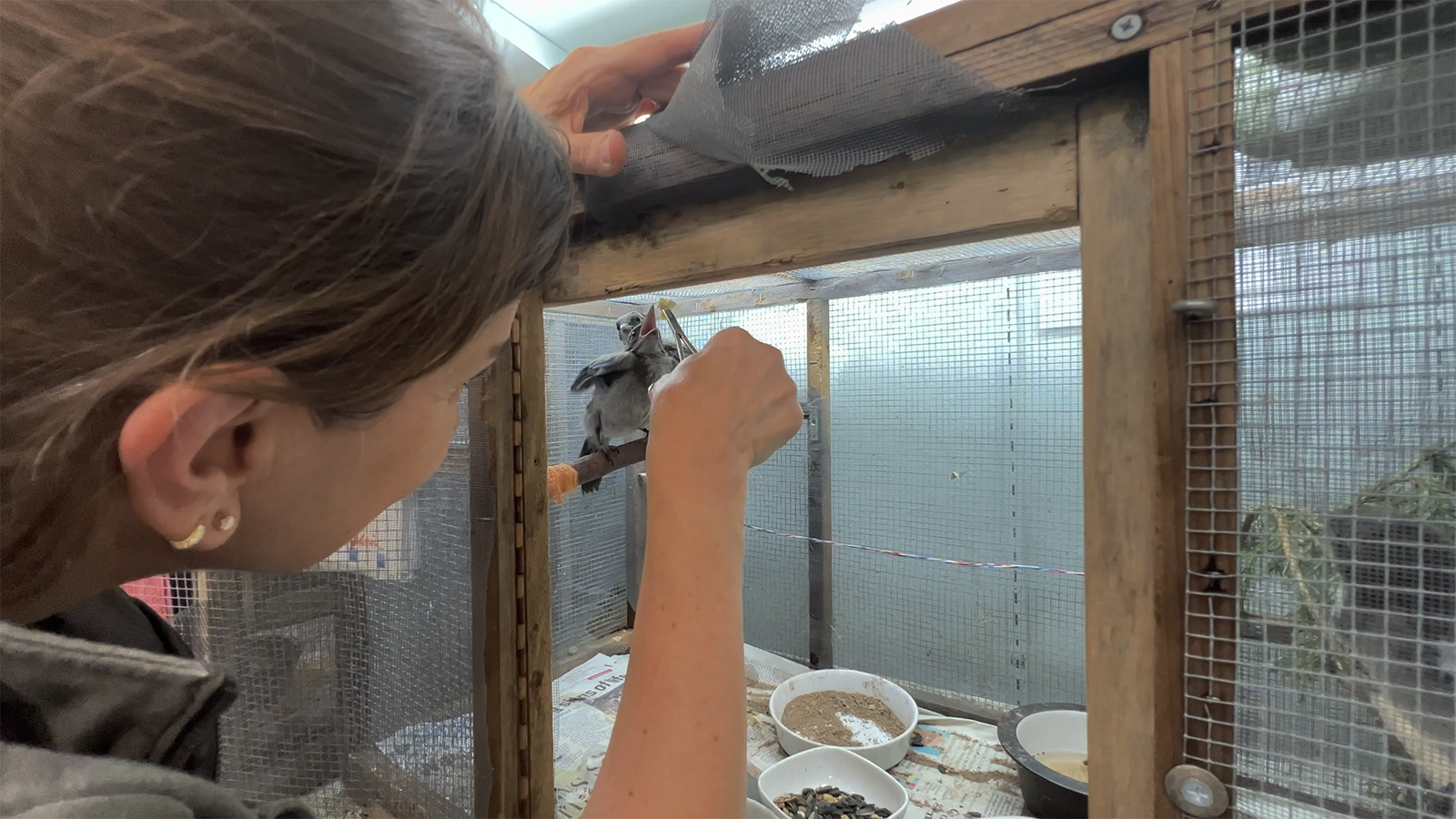
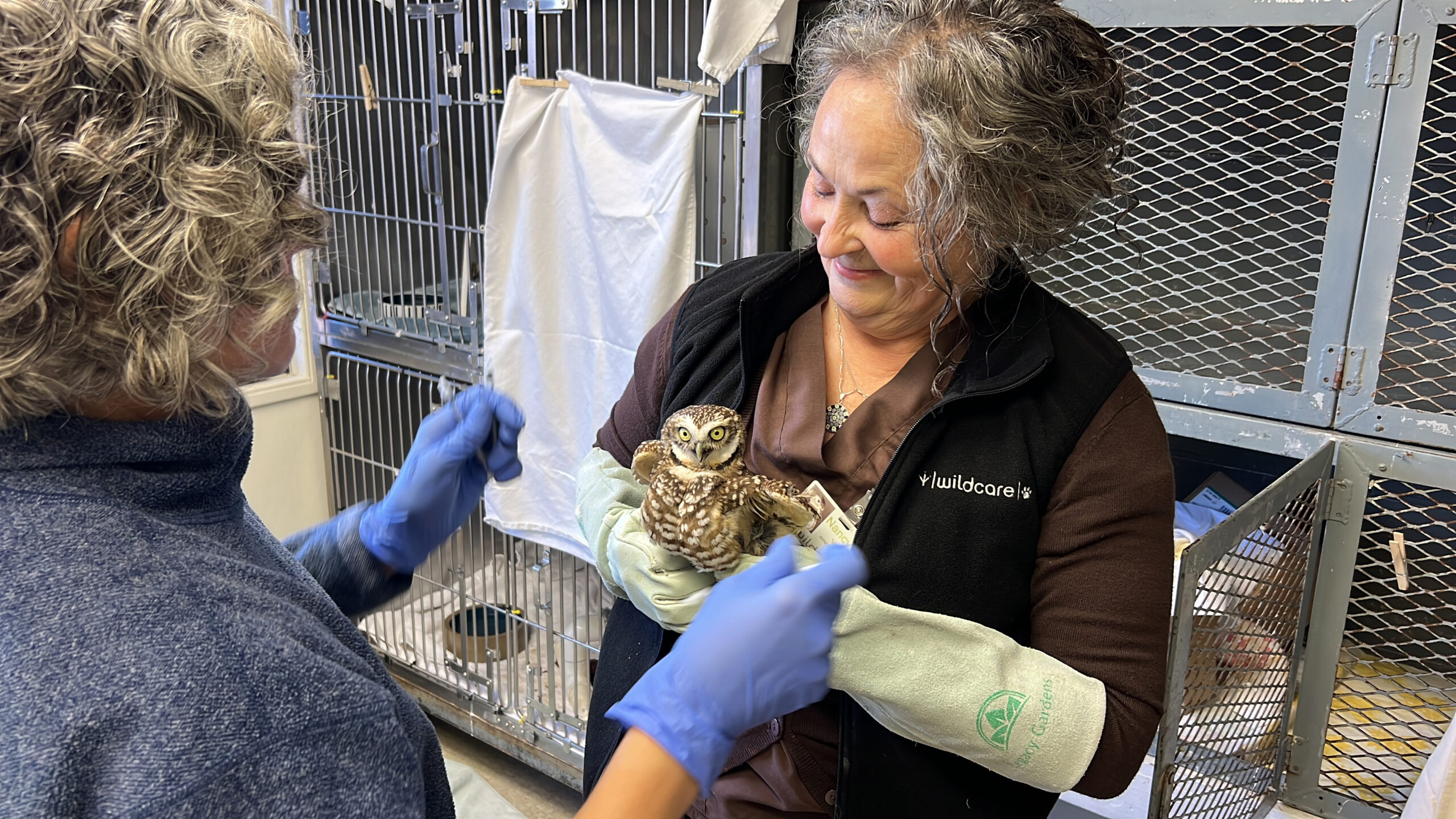
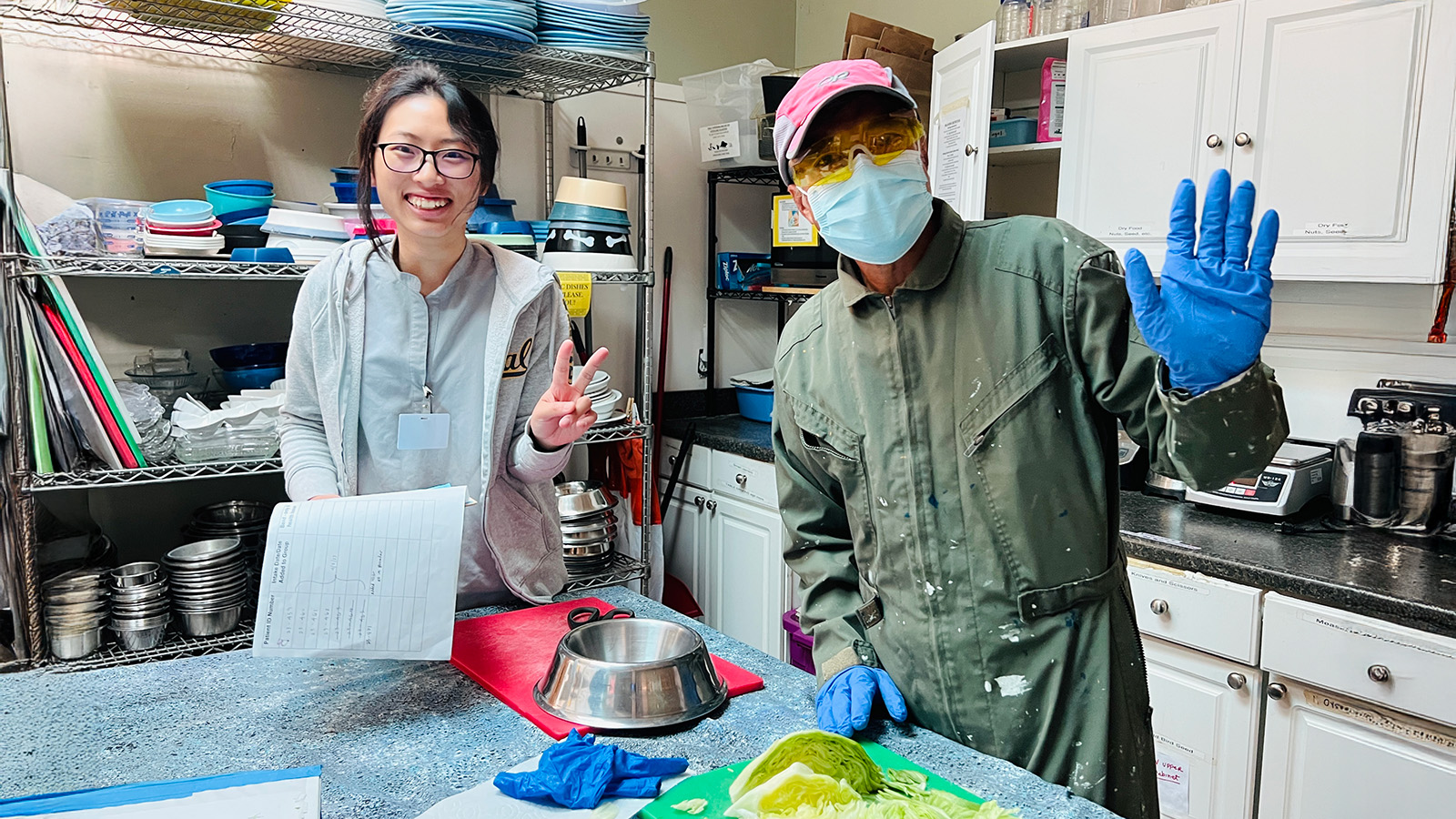
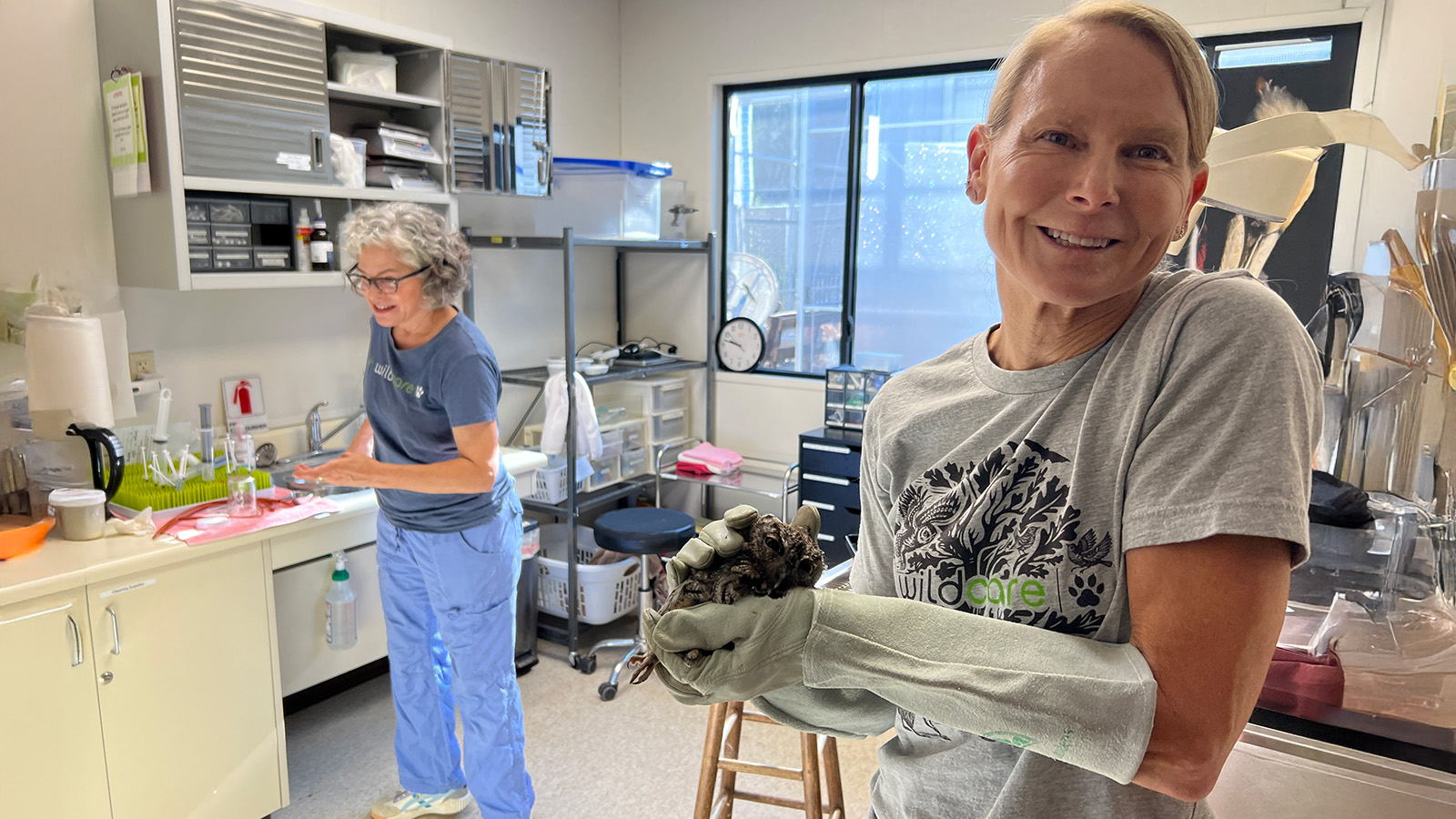
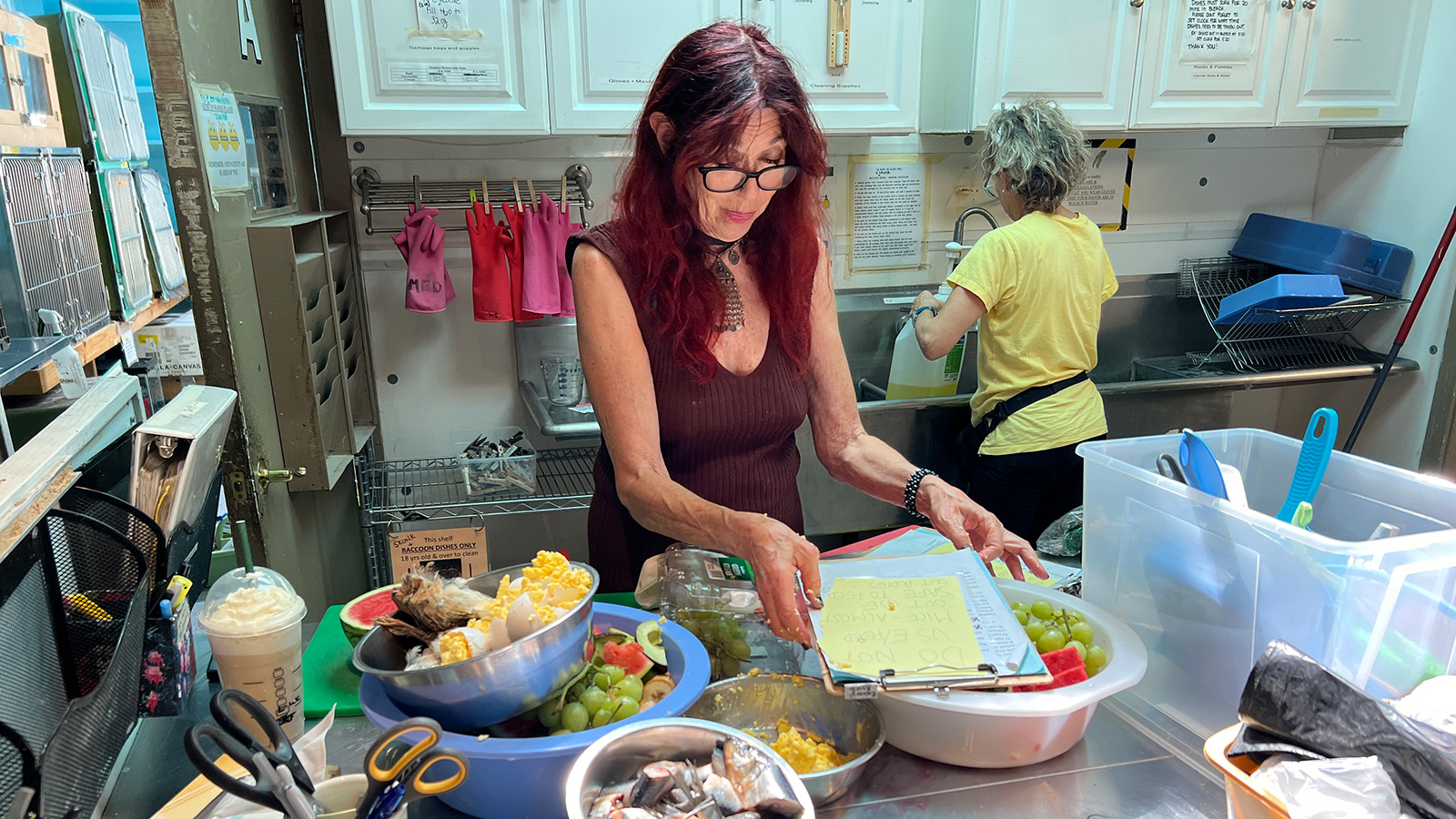


Volunteering in WildCare’s Wildlife Hospital
Our Wildlife Hospital cares for over 3,500 wild animals a year, from as many as 200 different species.
We provide ongoing care for our patients seven days a week, 52 weeks a year with a dedicated team of staff and more than 250 volunteers.
Our goal? To restore our wild patients to full health so that they may be released safely back to their natural habitats.
Volunteers learn species identification, hygiene and safety precautions and protocols, proper diet and food preparation, physical therapy regimens, and proper handling techniques.
Hospital staff and volunteers work to provide comprehensive diagnoses and treatments for our patients utilizing x-rays, blood work and more. Everyone works together to accommodate the feeding, cleaning and medication requirements of each patient.
“I volunteer because I want to make a difference. WildCare makes it possible to both help animals and educate the public about wildlife, and I love that.”
– Shelly Ross, Wildlife Hospital and Raccoon Foster Care Volunteer
WildCare’s 2026 Wildlife Hospital Volunteer application is now closed. Thank you for your interest in volunteering with WildCare!
LEARN MORE ABOUT VOLUNTEERING:
NEW VOLUNTEER ORIENTATIONS
Anyone wanting to become a Wildlife Hospital volunteer must be able to meet the following requirements (no exceptions):
- Register for and attend a MANDATORY ORIENTATION (please check information here)
- If you decide to onboard as a volunteer after attending the orientation presentation, a $75 nonrefundable training fee is also required. You may request a scholarship by sending an explanation of your circumstances to volunteer@discoverwildcare.org.
- Complete all online and in-person trainings (check details)
- Commit to a 4-hour weekly shift in WildCare’s Wildlife Hospital
- Commit to a minimum of 9 months on the weekly shift (though we hope you’ll stay for many years to come!)
Please also note that WildCare has a limited number of volunteer positions available, so not all applicants will be accepted.
Please complete an application when it is available, and mark your calendar for the in-person orientation (dates to be announced)
Completed applications will serve as RSVPs for the new volunteer orientation. Any additional questions you might have will be answered at the orientation.
Under 18? Learn more about our Youth Volunteer Program for high school students!
VOLUNTEER TRAINING
All incoming hospital volunteers will be required to attend three weeks of in-person trainings and complete our 6-class New Hospital Volunteer Training Series on our Google Classroom portal. A Google account is highly encouraged for training and volunteering at WildCare.
Once working in the Wildlife Hospital, volunteers progress through 3 training levels learning increasingly advanced skills in medical treatment and animal handling. Volunteers are expected to master the skills of one level before progressing to the next, however volunteers are encouraged to ask questions and observe procedures at any level in order to increase their training and experience.
WildCare’s Wildlife Hospital is a teaching hospital, and staff and senior volunteers are always available for questions and help.
In addition, volunteers are required to attend at least one California Department of Fish & Wildlife-approved educational class per year, participate in safety training and successfully pass an annual safety quiz. Classes are held frequently at WildCare and volunteers are encouraged to attend as many classes as they wish.
HOSPITAL REQUIREMENTS
- Volunteers must be 18 years or older before the MANDATORY ORIENTATION (see information here). You must be 18 years or older before you start your volunteer shift in the Wildlife Hospital.
- Interested volunteers between the ages of 15 and 17 should consider our Youth Volunteer Program. We also suggest subscribing to our e-newsletter to be the first to know of upcoming volunteer opportunities for teens and young adults.
- All volunteers must register for and attend a New Volunteer Orientation (no exceptions).
- All volunteers must fill out, sign, and turn in all required documents that will be provided if they are selected as a volunteer.
- New incoming volunteers must attend 3 weeks of in-person training, and complete 6 online classes through our Google Classroom portal.
- The minimum commitment for new hospital volunteers is from March through the end of WildCare’s “Baby Season” usually ending late October.
COMMITMENT REQUIREMENTS
We always ask potential volunteers to seriously evaluate their schedules and other commitments before they join our volunteer team, because WildCare’s hospital is 95% volunteer driven and our wildlife patients depend on the volunteers for their food, caging and medical needs.
Volunteers are expected to attend their scheduled shift every week, and missing a scheduled shift can impact our patients’ well being!
We ask all incoming volunteers to make a commitment to a regular volunteer shift from the date of their first training class through our “Baby Season” which usually ends in late October.
Due to the extensive training needed, this is the minimum requirement and most volunteers continue to volunteer beyond this original commitment.
Each trained volunteer must commit to one 4-hour shift in the hospital per week. You will volunteer on the same shift every week.
Shifts are scheduled 7 days a week at 9am – 1pm or 1pm – 5pm year-round.
During the summer, shifts are also needed in the songbird room from 5pm – 9pm. These late evening and early morning shifts are available to volunteers in their second year. At any given time some shifts may be full and not taking new volunteers.
HEALTH & SAFETY CONSIDERATIONS
Volunteering with wild animals involves some inherent health risks and WildCare is committed to minimizing or eliminating these risks.
The health and safety of our volunteers is our top priority. Protective clothing such as gloves, eye protection and face masks is required when handling many of our patients.
Volunteers who do not follow proper safety precautions in the hospital will be asked to leave WildCare.
- It is recommended that people with compromised immune systems DO NOT volunteer in wildlife rehabilitation.
- We recommend that anyone volunteering at WildCare inform their regular doctor that they are working with wildlife.
- Pregnant women are not allowed to volunteer with the animals at WildCare.
- Proper safety and hygiene precautions must be followed at all times.
- Volunteers are required to have a current tetanus vaccine, but no other vaccinations are required.
- Proper safety and hygiene precautions must be followed at all times, including all mask and social distancing protocols as outlined by WildCare, the Center for Disease Control, and Marin County.
- Volunteers are required to have a current tetanus vaccine, and COVID-19 vaccination is encouraged.
VOLUNTEER CLOTHING
Volunteers are required to wear closed-toe shoes at all times.
Other clothing guidelines are at the volunteer’s discretion, but we recommend comfortable long sleeves and pants.
Always wear something you do not mind getting dirty! Work at WildCare is very hard on clothing. Most volunteers have separate clothing they change into when they arrive.
Medical scrubs are always a good choice.
VOLUNTEERS WITH PETS
Some diseases that are not transmittable to us may be a danger to our pets. These are called epizoonotic diseases. Potentially sick wild animals must never come in contact with domestic animals. The following precautions should be considered:
- Be careful to change out of your volunteer clothing and wash well before going into pet-occupied areas of your home.
- A special pair of shoes should be set aside for exclusive use in the Wildlife Hospital.
- Volunteers with pet birds should take additional precautions as some avian conditions may be more easily transmitted between WildCare’s patients and pet birds. Wash hands frequently and well, change clothes before handling pet birds, and inform your supervisor and Medical Staff that you have birds so that your contact with contagious patients may be minimized.
With these precautions, the risks to you and your pets will be kept to a minimum.
Everyone at WildCare loves animals, and most of us share our lives with domestic animals.
With the precautions taken above, your pets (and ours!) will remain healthy and safe while you volunteer at WildCare.
ZOONOTIC DISEASES
All animals can carry, contract and spread various diseases, and the wildlife we handle is no exception.
Although many diseases are species-specific, some may be transferred between species and to us.
Diseases we can contract from animals are called zoonotic diseases or zoonoses.
Zoonoses are a concern in wildlife rehabilitation. However, proper hygiene (washing hands before and after handling animals, eating, or using the washroom) and proper safety techniques (wearing gloves or masks as required) greatly minimize risk.