

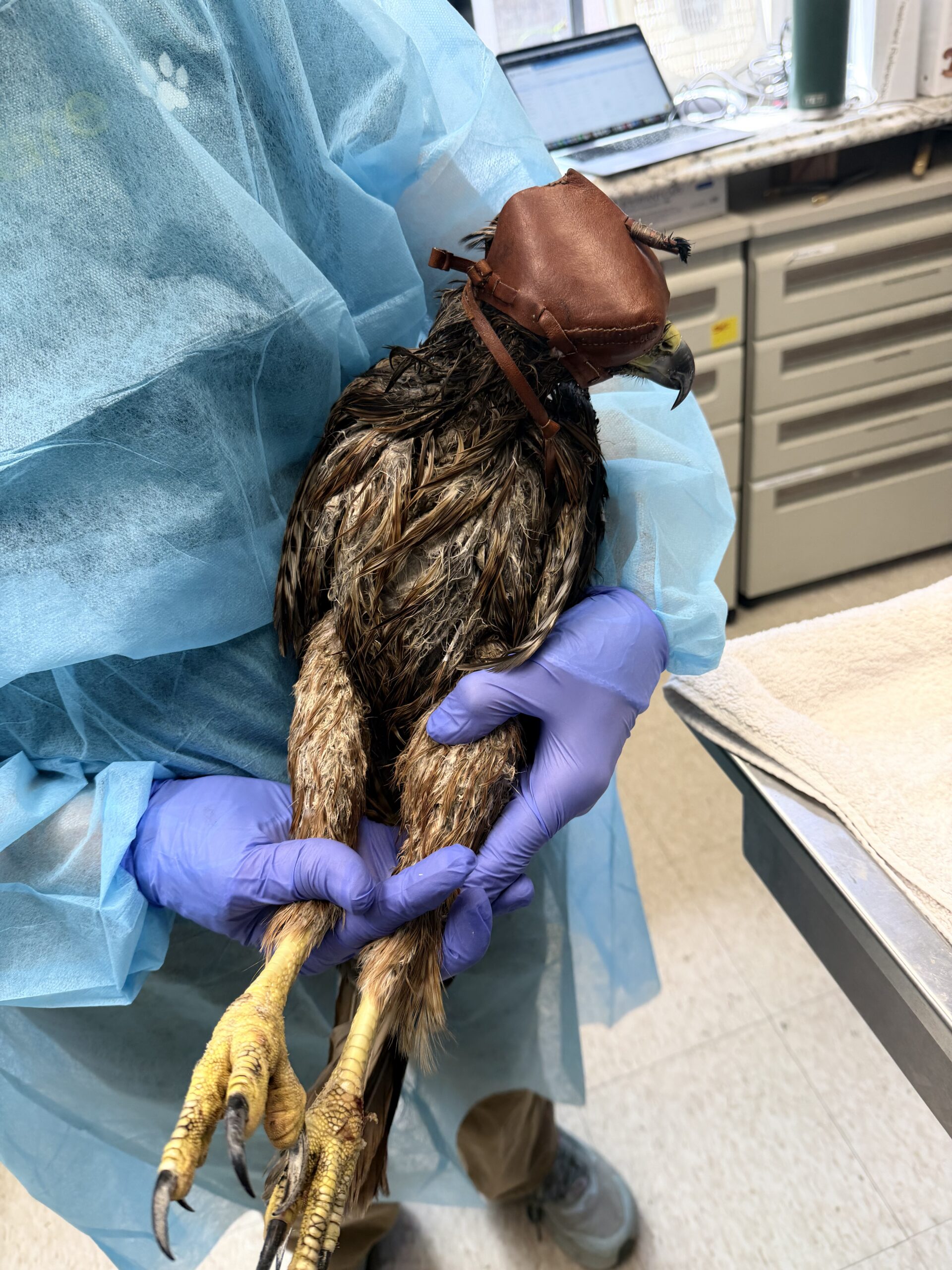
When a Red-tailed Hawk arrived at WildCare’s Wildlife Hospital on July 7, our team knew within seconds that this was not a typical intake. He was cold, soaking wet, and covered head to talon in sewage sludge, with a smell strong enough to clear a room. But underneath the grime was a bird that was alert, feisty, and remarkably strong.
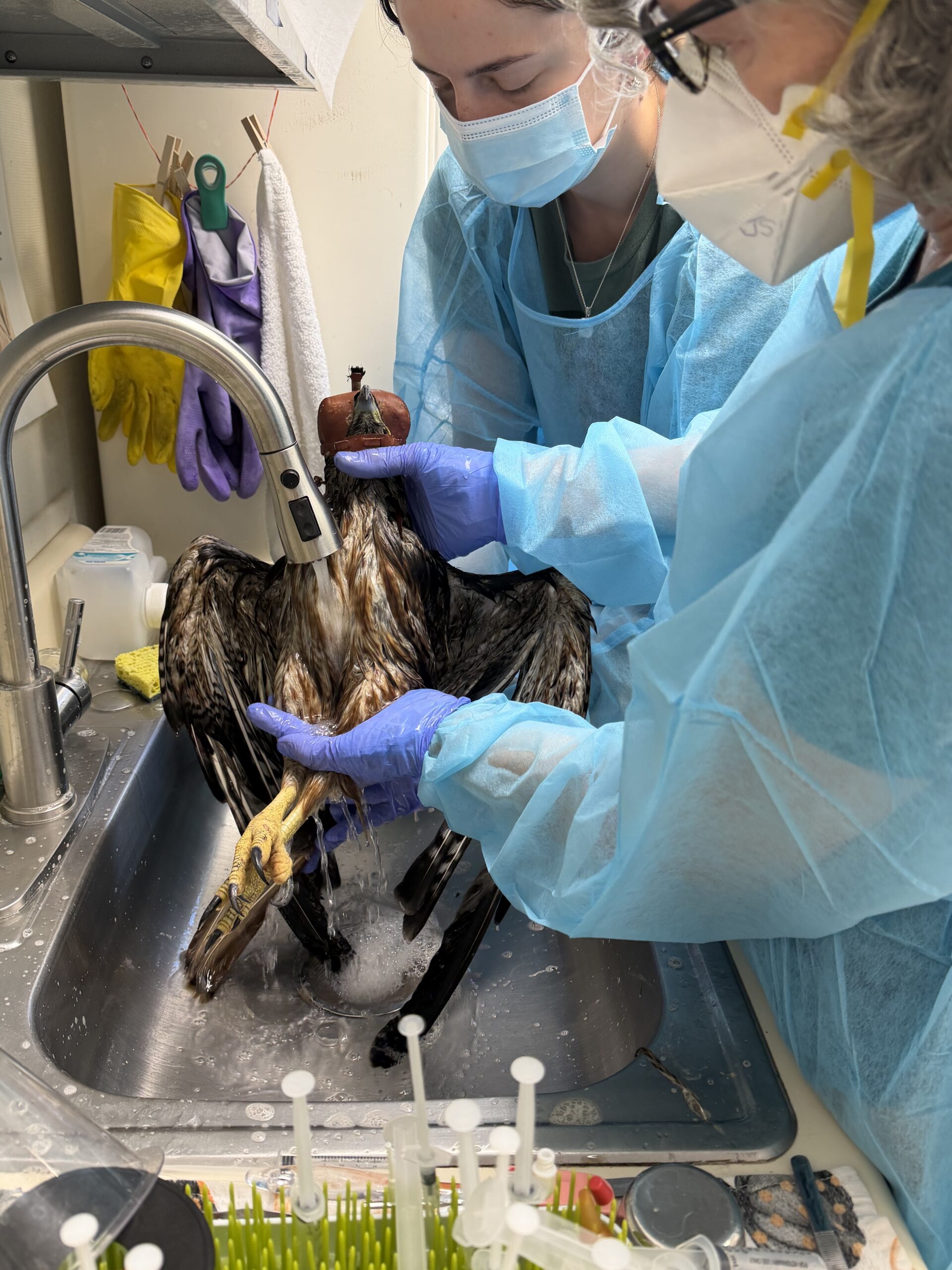
But First, THE HAWK Needed a Bath
Before our medical team could even take his weight, they had to warm him up. His body temperature had dropped dangerously low from sitting wet and exposed, so he went straight into our ICU to stabilize.
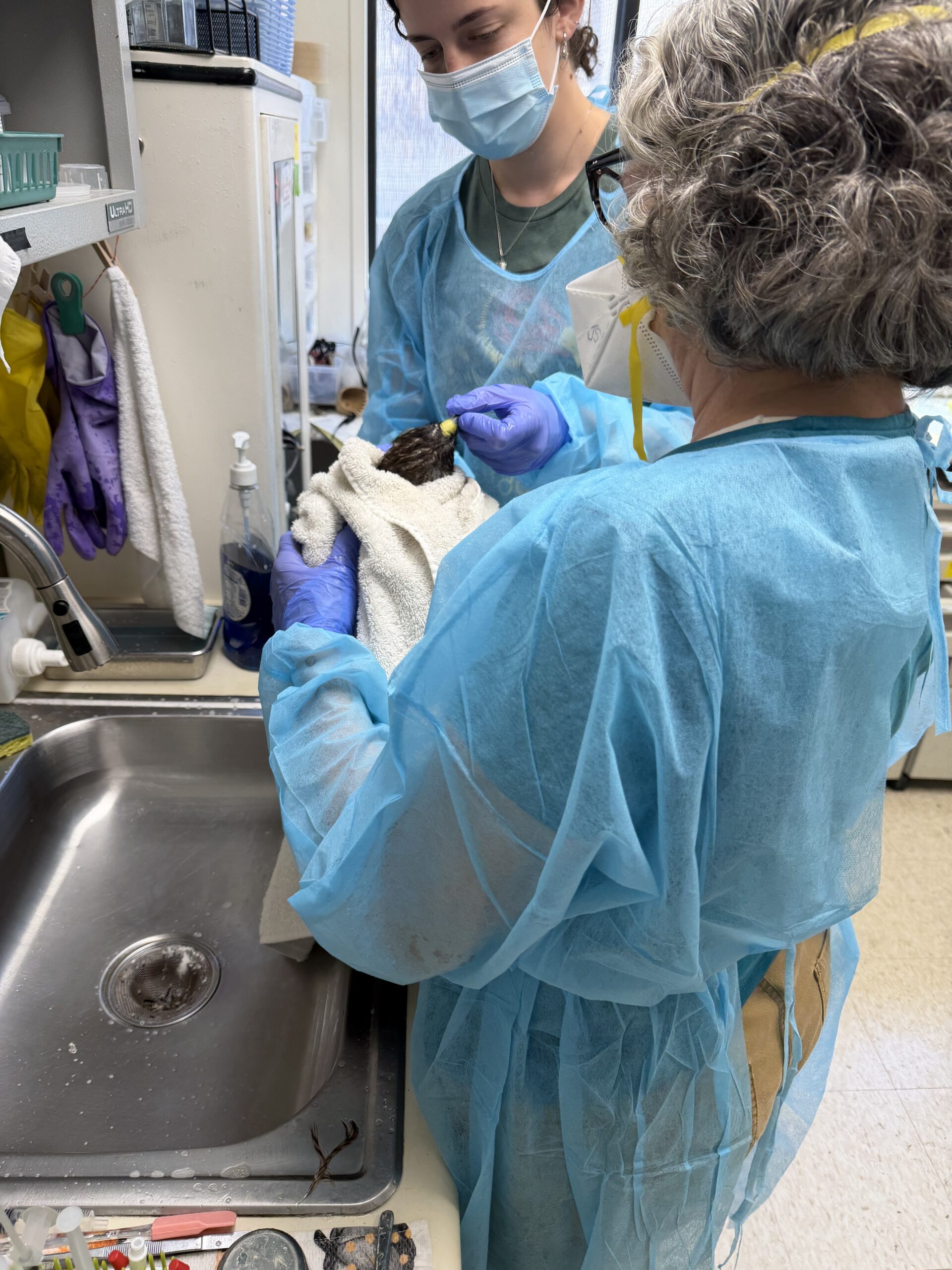
Once he was warm enough, the real work began. Sludge coats feathers, stripping them of the waterproofing and insulation a bird depends on to survive. To safely clean him, our team sedated him and gave him a careful bath using Dawn dish soap, the same gentle but effective method wildlife hospitals use on oil-spill patients. Afterward, he went back into the ICU to dry out completely before the real recovery could start.
A Patient With Plenty of Attitude
From the very beginning, this hawk made his opinions known. Within a day, our team noted he was “very BAR” (bright, alert, and responsive) and strong enough to get a talon through a handler’s thick falconry gloves.
His appetite took a few days to catch up to his attitude. Once it did, he ate everything offered to him, and his weight and feather condition improved by the day. By July 11, he had moved to an outdoor enclosure, where he was flying well, sharp, and clearly unimpressed with his surroundings. One recheck note summed up his mood perfectly: he seemed to be asking his care team, “Who am I? Why am I here?”
Just five days after arriving covered in sludge, the hawk was back to full strength, fully dry, and ready to go back to the wild where he belonged. On July 12, our team cleared him for release, and he returned to Marin’s skies.
Why This Matters
Contamination like this is more common than people realize. Storm drains, sewage overflows, and polluted waterways don’t just affect water quality, they directly threaten the wildlife that share our neighborhoods. A bird coated in sludge can lose the ability to fly, regulate its body temperature, or even survive without help.
If you ever find a wild animal that appears oiled, sludge-covered, or contaminated in any way, do not attempt to clean it yourself. Improper cleaning can cause more harm than good. Call WildCare’s Living with Wildlife Hotline at 415-456-7283 right away so our trained team can respond safely.
This hawk’s fast recovery is a reminder of just how resilient wildlife can be, with the right help at the right time.
WildCare cares for more than 3,500 wild patients every year. Make a gift today and help us give the next patient the second chance they deserve.