
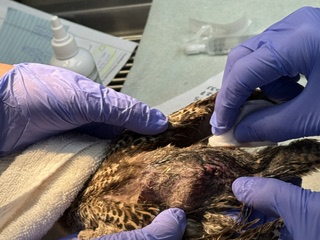
Turkey brought into WildCare with dog bites.
Dogs are beloved members of our families. They hike with us, explore beaches with us, and accompany us on adventures throughout Marin County.
But even the friendliest dog can pose a serious risk to wildlife.
Every year, WildCare’s Wildlife Hospital treats animals injured after encounters with dogs. From baby birds and nesting shorebirds to squirrels, rabbits, reptiles, and fawns, wildlife often pays the price for a moment of curiosity, excitement, or instinctive behavior.
The good news is that many of these injuries are entirely preventable.
Why Dogs and Wildlife Don’t Mix
Dogs are predators by nature. Even well-trained pets retain instincts to chase, investigate, and grab moving animals.
For wildlife, an approaching dog can cause injury in several ways:
- Direct attacks and bites leading to painful injury or even death
- Chasing animals into roads, fences, or dangerous terrain
- Disturbing nests and dens
- Separating young from their parents
- Creating stress that forces wildlife to leave critical feeding or resting areas
In many cases, the dog isn’t acting aggressively. It’s simply behaving like a dog.
Unfortunately, wildlife can still suffer the consequences.
Baby Season Is Especially Risky
Spring and summer are particularly challenging for wildlife.
Many animals are nesting, raising young, or teaching juveniles how to survive. Ground-nesting birds, hidden fawns, baby rabbits, and recently fledged birds are especially vulnerable.
What appears to be an empty patch of grass or brush may actually contain a nest, a den, or a young animal waiting for its parents to return.
A curious dog can unintentionally injure wildlife before an owner even realizes an animal was present.
Off-Leash Doesn’t Mean Impact-Free
Many people assume that if their dog isn’t chasing wildlife, there’s no problem.
But wildlife often perceives dogs differently than humans do.
The presence of an off-leash dog can cause birds to abandon feeding areas, interrupt nesting behavior, or expend valuable energy repeatedly fleeing what they perceive as a predator.
For migratory birds and wildlife already facing habitat loss and environmental pressures, these disturbances can have significant consequences.
How You Can Help
Protecting wildlife doesn’t mean leaving your dog at home.
Small actions can make a big difference:
- Keep Dogs Leashed Where Required
Leash laws exist to protect both wildlife and pets. - During baby season (March-September) consider keeping your dog leashed at all times, even in areas where it might not be required.
Before letting your dog out into your yard, turn on the lights and make some noise. This will give wild animals that are able, a moment to leave your property. This is also one of the best ways to prevent your dog from being skunked! - Stay on Designated Trails
Avoiding sensitive habitat reduces the likelihood of disturbing nests, dens, and resting animals. - Give Wildlife Space
If you spot wildlife, create distance and keep dogs close. - Watch for Baby Animals
Spring and summer are peak seasons for vulnerable young wildlife.
Learn Before You Rescue
Not every baby animal needs help. If you find a young animal, contact WildCare’s Living with Wildlife Hotline at 415-456-SAVE (7283) before intervening.
Sharing Our Community
Marin County’s parks, beaches, and open spaces belong to all of us—including the wildlife that call them home.
Responsible pet ownership isn’t just about protecting wildlife from injury. It’s about creating a community where people, pets, and wild animals can coexist safely.
By keeping dogs leashed during baby season and respecting sensitive wildlife habitats, we can help ensure that future generations continue to experience the incredible diversity of wildlife that makes Marin County so special.
Because sometimes the best way to help wildlife is as simple as holding the other end of the leash.
Help Wildlife Recover
WildCare treats hundreds of wildlife patients every year, including animals injured after encounters with domestic pets.
Your support helps provide lifesaving medical care, rehabilitation, and public education that prevent future injuries and promote coexistence between people, pets, and wildlife.
Make a gift today and help WildCare protect Marin’s wild neighbors.