
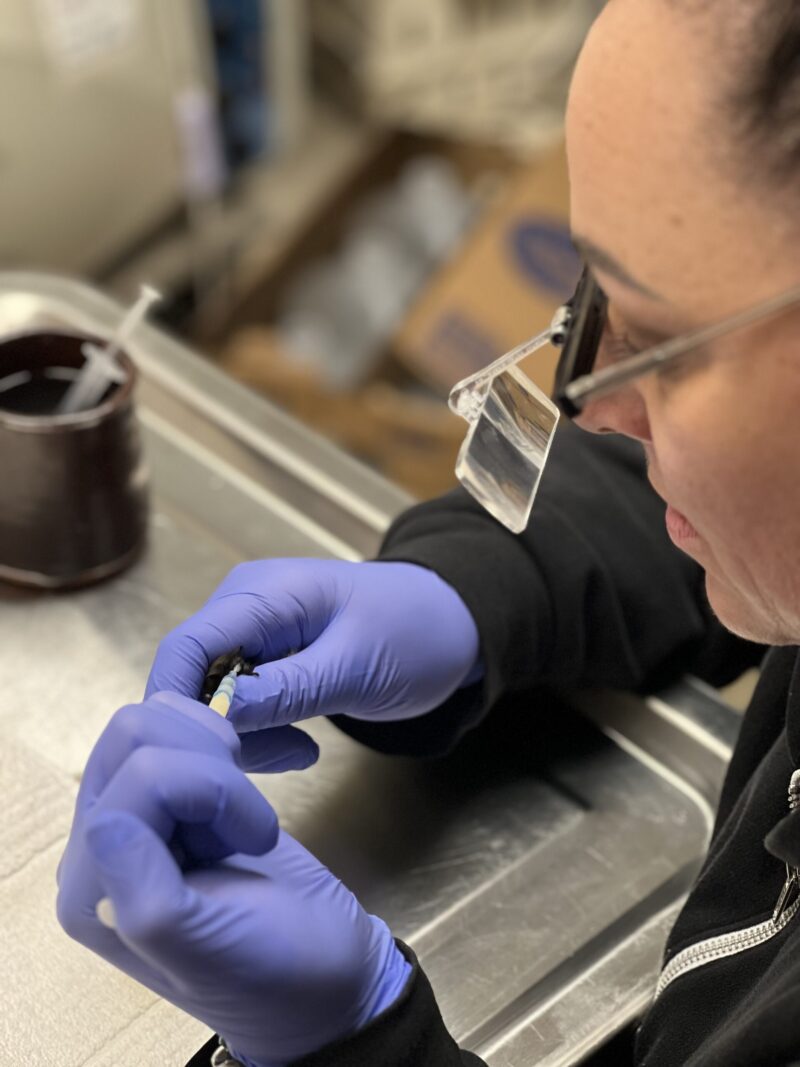
Some animals arrive at WildCare after long journeys. These three arrived after a very short one, from a doorstep in Tiburon. They were delivered with care by Marin Humane where the slow, careful work of saving their lives began.
About the California Myotis
The California Myotis (Myotis californicus) is one of the smallest bats in North America with full grown adults weighing just 3 to 5 grams, less than a nickel! So you can imagine how tiny the neonates are! They roost in rock crevices, tree bark, and building eaves throughout California and the western United States. What they lack in size they make up for in appetite: a single bat can consume hundreds of insects in one night, making them quiet, essential partners in keeping ecosystems and our backyards in balance.
California Myotis mothers give birth to just one pup each spring. That single offspring receives intense, devoted care, nursing frequently and clinging to its mother almost continuously for warmth and nourishment in those first fragile weeks. Finding three pups together without a mother is deeply unusual, and speaks to how much these little ones needed help.
Why orphaned pups are so vulnerable
Without their mother, baby bats face a cascade of threats. They cannot regulate their own body temperature, cannot feed themselves, and are acutely sensitive to stress. A pup that goes too long without food or becomes too cold, too warm, or too frightened can decline rapidly. Even a single missed feeding matters.
WildCare’s Bat Foster Care Team members are stepping in as surrogate caregivers for all three, offering specialized bat formula every two to three hours, day and night, in a carefully temperature-controlled environment. Even though the risk of these newborns having rabies is low, all bat care is performed by trained, rabies vaccinated team members, following strict safety protocols.
The road ahead
As these pups continue to grow and thrive, the weeks ahead will bring new milestones: fur, flight, and eventually the instinct to hunt. Happily, having three patients together is itself an advantage. It is imperative that orphan wildlife be raised with conspecifics so that they don’t habituate to humans. Additionally, bats are social animals, so being raised as a small group supports healthier physical, mental and social development, giving them the best chance of success once released back into the wild.
The goal is always the same: a wild life, lived freely. Three tiny bats at a time.
WILDLIFE TIP
Found a bat on the ground? Never handle any rabies vector species with bare hands. Wearing leather gloves, place a container over the bat to keep them contained, and immediately call WildCare’s Injured Wildlife Hotline at 415-456-SAVE (7283) for advice.
(Do not to leave the bat unattended, in direct sun or where children or pets can access).
Help Wildlife Families Thrive
Baby season is WildCare’s busiest time of year. Every day, our Wildlife Hospital team cares for orphaned and injured young animals that need specialized food, medical treatment, and around-the-clock attention.
Your support helps provide lifesaving care for vulnerable wildlife and gives young animals the second chance they deserve.
Make a gift today and help WildCare provide the best medical care for wildlife in Marin County and the Bay Area!