
About Wildcare
Ensuring all species can coexist
At WildCare, we work to make sure all species can coexist— not just by treating sick or injured animals (nearly 4,000 of them a year), but also by teaching children and adults to understand and appreciate wildlife, by sharing knowledge and instructions on how to live peacefully with the animals among us and by advocating for better protection of wildlife and our remaining open spaces.
Take Action! Is Your Shopping List Killing Songbirds?
One of the easiest things we can do to help wildlife and ourselves is to shop wisely. The imported fruits and vegetables found in our shopping carts in winter and early spring are grown with types and amounts of pesticides that would often be illegal in the United States.
Learn MoreThe best part of the program is the overall love of and enthusiasm of the docents for sharing the wonders of redwoods with my 4th grade students. They were all excellent and I was amazed at how focused my group of wiggly students were. The content knowledge and ‘citizen scientists’ aspects interwoven made the content very accessible and applicable.
– Wendy Funk, Teacher
In a time of decreasing and stressed habitats, WildCare’s purpose only becomes more important… As a father of two, Wildcare provided my children with an intimate look at the beauty of wild animals and those that care for them.
– Jamie Redford, recipient of the WildCare Environmental Award
This [WildCare] program ties into environmental awareness that is part of classroom culture. Since many of our San Francisco students are from the city, they are “nature deprived”. This gave the students a chance to see nature in its wild form.
– Robert Savant, Teacher
My first experience with WildCare was rescuing an injured bird. I was struck by the kindness that I was met with, and I was grateful for the existence of WildCare. Volunteering at WildCare, and teaching children and adults about wildlife, feels like kicking off a lifetime of caring.
– Beth Ridout, Volunteer
The presentation was so interactive and engaging for our kindergarten students! They learned SO much and had an incredible time. It was also great that they were able to touch the [taxidermy] animals at the end of the presentation.
– Katie Keating-Klamm, Teacher
When I think about the work we do, I feel excited and hopeful about the future. Perhaps with WildCare’s volunteers — people with vision and talent and self-actualized dreams — Mother Nature will stand a chance. Our planet will be healed, one animal at a time.
– Marisa Woods, Volunteer
WildCare Family Adventures
Enjoy a FREE day of discovery and learning out in nature with your family. WildCare naturalists will lead fun, bilingual, family outings, encouraging local families to enjoy Marin’s parks and open spaces, with the objective of deepening our commitment to take care of nature. Space is limited!
Register Now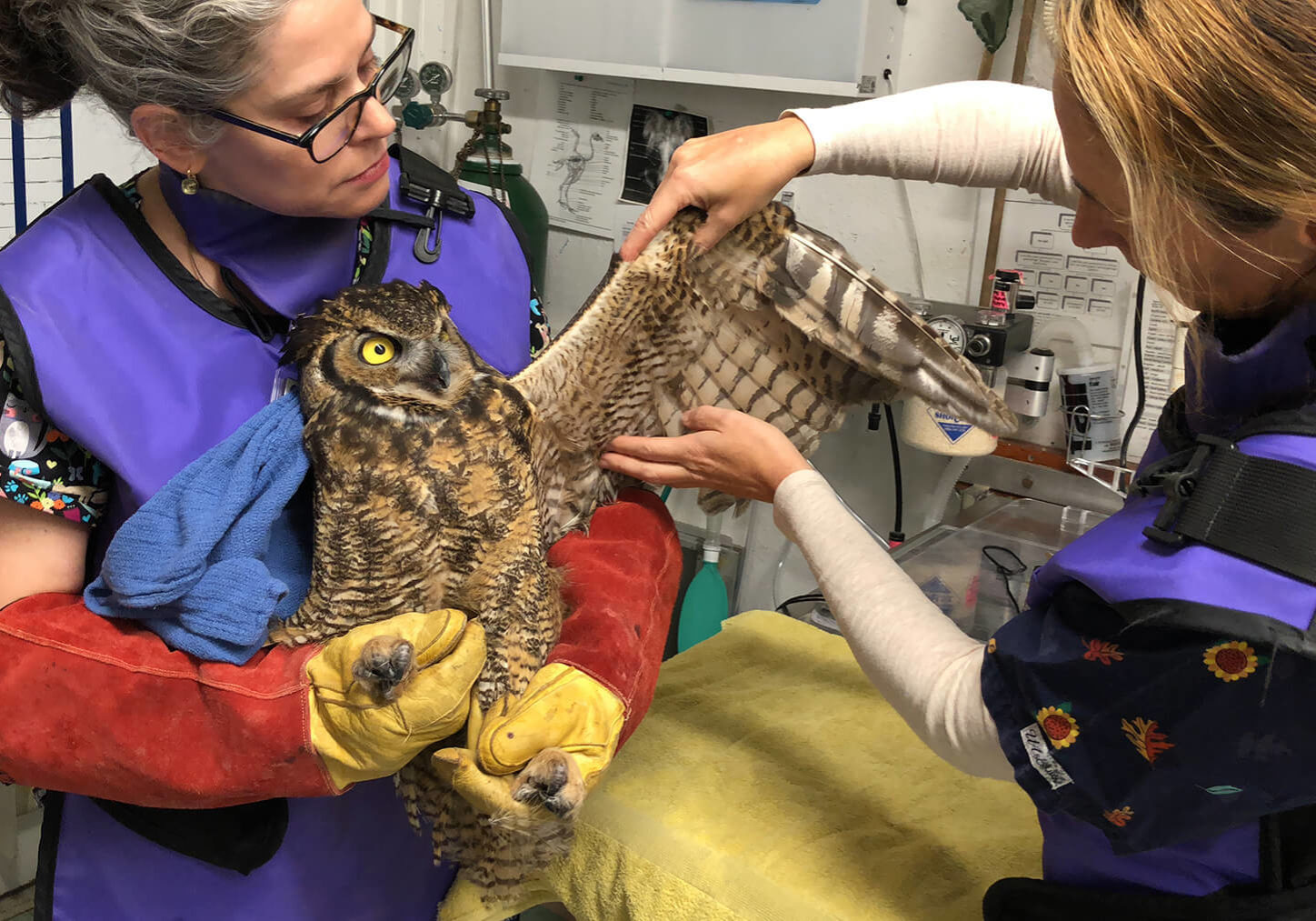
200 Different Species Treated
Highly experienced Wildlife Hospital staff and volunteers provide comprehensive diagnoses and treatments for our patients utilizing x-rays, blood work and more. WildCare’s staff veterinarian guides treatments and protocols, and ensures that wildlife patients receive the best possible care.
Learn more
Found an ill, injured or orphaned animal?
Call WildCare at 415-456-SAVE (7283)
Operators are available from 9am to 5pm, 365 days a year.After 5pm PST foremergencies only, call our Wildlife Emergency Nightline at 415-300-6359.
Help make our work possible!
WildCare cares for as many as 4,000 ill, injured and orphaned wild animals every year, and we teach over 35,000 children and adults every year.
We can’t heal animals, educate the next generation or advocate for wildlife without your help!
Ways to GiveLiving with Wildlife
WildCare’s goal is to help people live well with wildlife, and all of our programs work together to help people navigate that boundary where humans and animals come into contact with each other.WildCare believes that the more we know about wildlife and the environment around us, the better we can coexist.