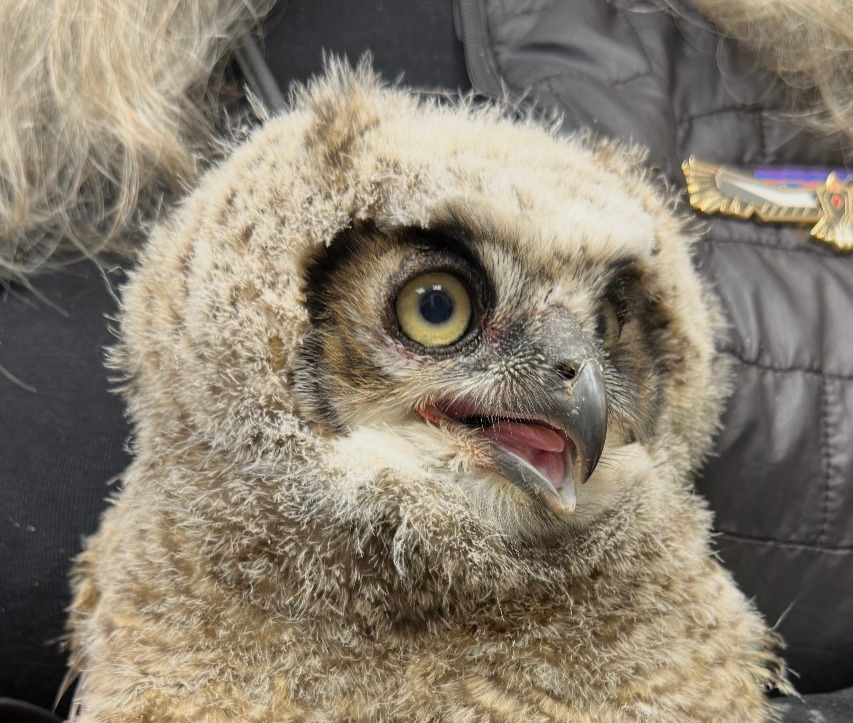
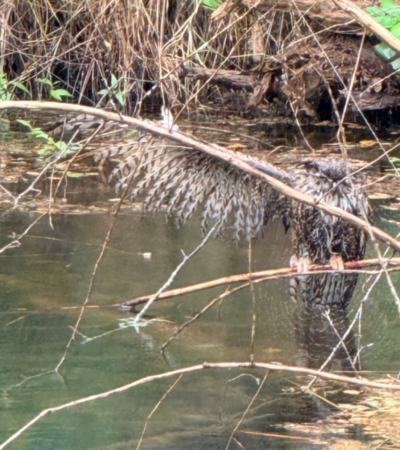
High above the water, tangled in fishing line, a young Great Horned Owl struggled to free himself.
When WildCare received the call, partners at Marin Humane responded immediately. The rescue was anything but simple. With heavy winds, and the owl suspended over open water, reaching the bird was difficult and dangerous.
It was a race against time. But what happened next surprised even our team.
A Familiar Patient
During his intake exam, WildCare’s hospital team noticed a metal band on the owl’s leg.
That band revealed something remarkable: this owl had been a patient at WildCare before.
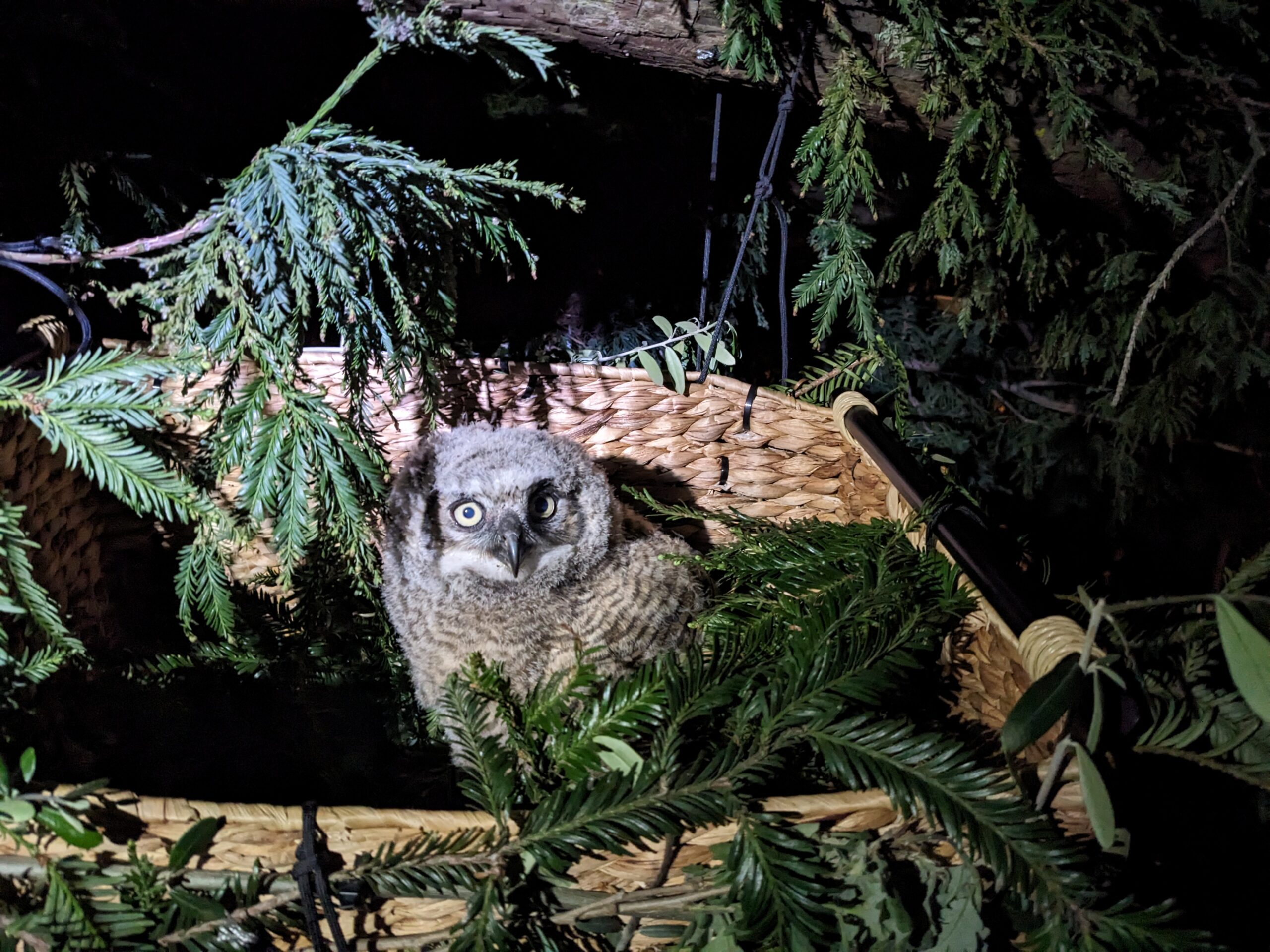
Almost exactly one year earlier, he had been admitted as a nestling after falling from his nest. Great Horned Owls do not build their own nests, instead taking over nests built by other species. These nests are often small or unstable and it is common for young owls to fall out before they are ready to leave.
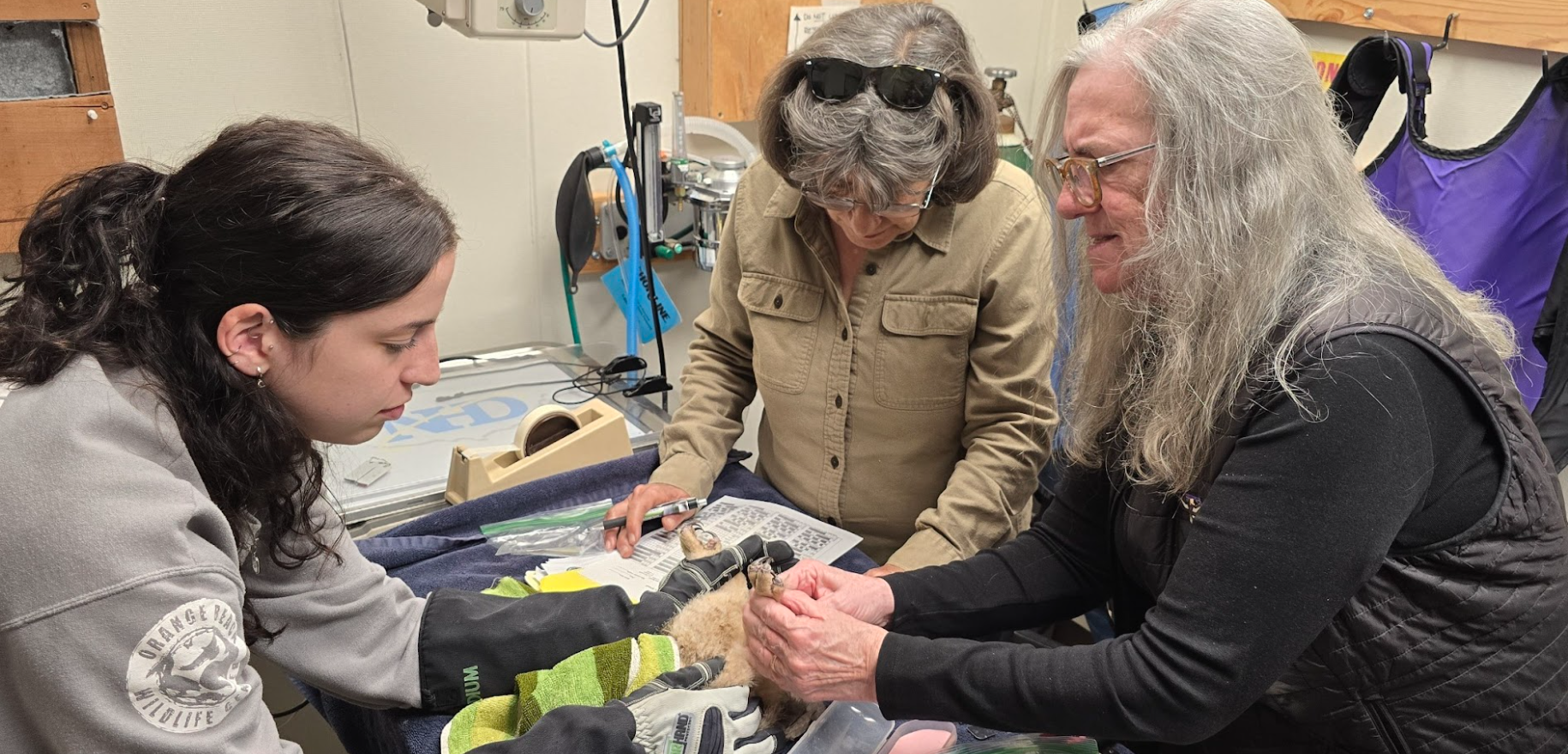
Thankfully, the owl showed no injuries from the fall. As with all young raptors admitted to WildCare, the team performed a full intake exam, including X-rays, bloodwork, and a complete physical assessment.
Once he was confirmed to be healthy, WildCare’s Raptor Reunite Team began the process of locating his family. They identified the original nest site and returned the following day with a trained tree climber, who installed an artificial nest at the original nest location. The owl was then reunited with his parents and sibling, allowing him to continue being raised in the wild.
As part of the release process, he was banded by researchers from the Golden Gate Raptor Observatory. Banding helps scientists track movement, survival and dispersal patterns, and provides valuable insight into whether reunited birds go on to thrive.
Encounters like this are rare. Fewer than half of young raptors survive their first year. This owl did.
He dispersed several miles from his original nest and had been successfully living in the wild until his recent entanglement.
Encounters like this are rare. Fewer than half of young raptors survive their first year. This owl did.
He dispersed several miles from his original nest and had been successfully living in the wild until his recent entanglement.
A Second Chance
When he arrived at WildCare again in 2026, the owl was cold, waterlogged, and tightly entangled in fishing line wrapped around his primary flight feathers.
WildCare’s medical team carefully removed the line and performed a full examination, including X-rays. Fortunately, no fractures or permanent damage were found.
After a night of supportive care, including fluids, rest, and pain management, the owl was moved to an aviary for flight testing. He demonstrated strong, stable flight with no signs of soft tissue or nerve injury.
With no complications identified, he was cleared for release.
Back to the Wild
After only a short stay, the owl was returned to the wild.
His successful release marked a rare and meaningful moment for the team: seeing a former patient not only survive, but thrive, and return again to his natural environment.
A Preventable Danger
Fishing line entanglement is a hazard WildCare sees regularly.
Discarded line can remain in the environment for years, posing a serious risk to birds and other wildlife. Animals may become trapped, unable to fly or move freely, often leading to severe injury or death.
This owl was fortunate. Many are not.
Live Well With Wildlife
WildCare’s work extends beyond treating injured animals. Through wildlife rehabilitation, education, advocacy and community outreach, we help people understand how their actions impact the animals around them.
Simple steps, including properly disposing of fishing line, avoiding rodenticides and learning how to safely coexist with wildlife, can prevent many of the injuries we see in our hospital.
Support Wildlife Care
Every rescue and recovery at WildCare is made possible by community support.
Your gift helps provide expert medical care for injured wildlife and supports education and outreach that can prevent these situations from happening in the first place.